Wet-area tile
Tile selection must be paired with a suitable substrate and wet-area assembly; tile and grout alone are not the complete moisture-management system.

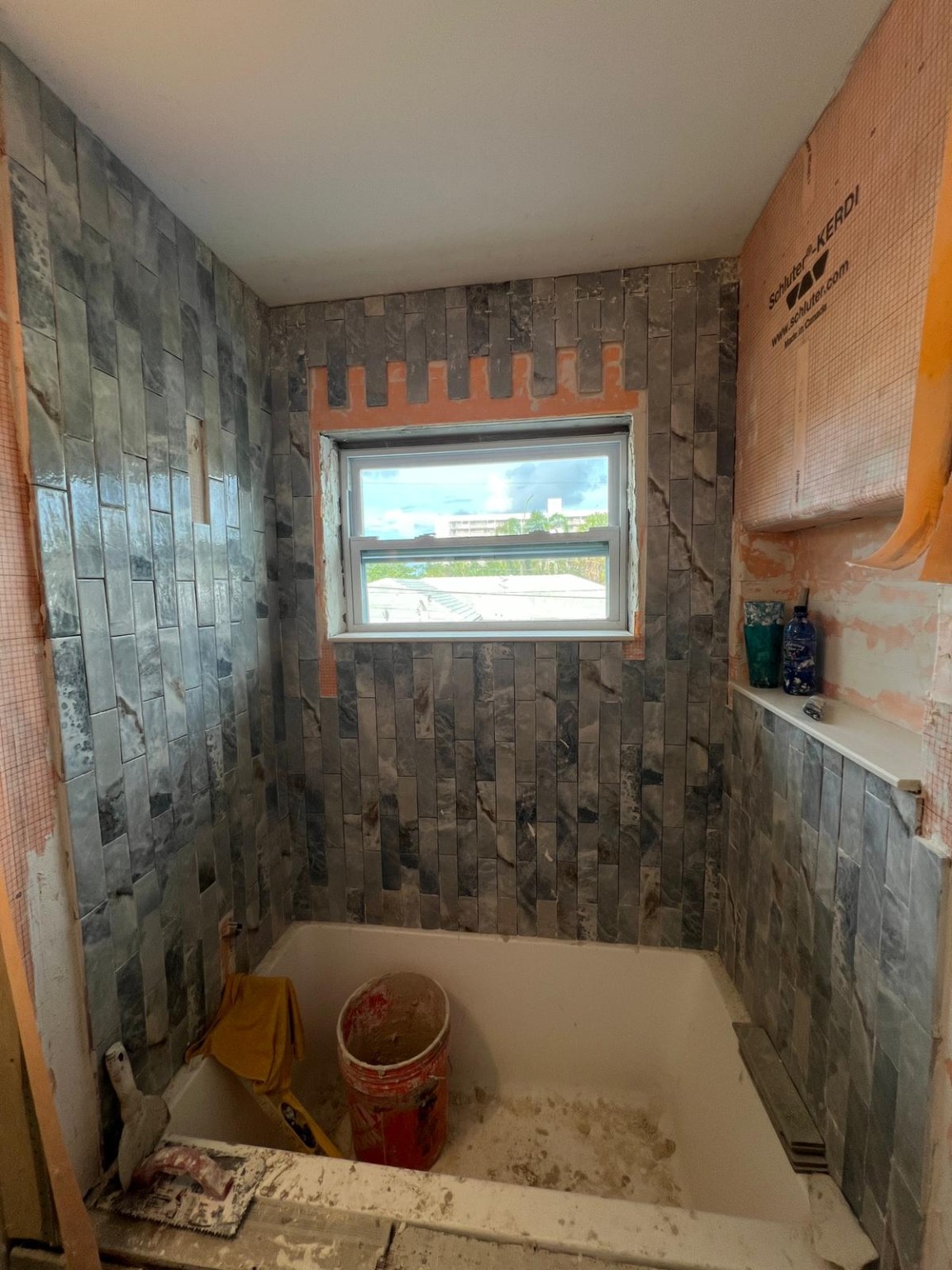
Livane Renovation delivers bathroom remodeling scopes across Miami-Dade, Broward and Palm Beach with attention to demolition, wet-area preparation, tile, millwork and finish coordination.
Livane Renovation handles bathroom remodeling scopes where tile layout, substrate condition, finish coordination, access, and durable installation matter.
We review existing conditions, dimensions, access, adjacent finishes, material requirements, and scheduling constraints before defining the scope. That keeps the proposal practical and helps homeowners, property owners, managers, and builders compare the work on clear terms.
Tile removal and installation, substrate preparation, wall and floor finishes, trim and millwork coordination, door replacement support, transitions, sealing details, and final finish work.
Service guide
Livane Renovation delivers bathroom remodeling scopes across Miami-Dade, Broward and Palm Beach with attention to demolition, wet-area preparation, tile, millwork and finish coordination. Bathroom remodeling combines visible finishes with concealed substrate and wet-area conditions. A credible scope distinguishes cosmetic replacement from work that opens walls or floors, changes fixtures or rebuilds tile assemblies. Plumbing and electrical changes should be coordinated according to the agreed scope and completed by appropriately qualified trades where required.
Inspect the room, visible moisture history, access and finishes to remain.
Define demolition boundaries and protection for adjoining spaces.
Remove selected finishes and reassess exposed substrate conditions.
Coordinate rough plumbing or electrical changes when included.
Prepare wet-area and tile substrates for the specified finish assembly.
Install tile, flooring and associated edge and transition details.
Coordinate vanity, countertop, fixtures, doors and remaining finishes.
Complete sealant, adjustments, detailing and final review.
Tile selection must be paired with a suitable substrate and wet-area assembly; tile and grout alone are not the complete moisture-management system.
Slip characteristics, transitions and the condition beneath the old finish matter alongside appearance.
Dimensions must coordinate with doors, plumbing locations, wall conditions and countertop overhangs.
Glass, fixtures, trim and sealant lines depend on accurate sequencing and completed substrate planes.
A cosmetic update may retain sound tile assemblies and fixture locations. A full remodel is more appropriate when layout, concealed conditions or multiple connected components need correction.
Yes, when it is sound and outside the intended scope. Loose tile, failed transitions or changes that interrupt the assembly can make selective retention impractical.
The substrate supports the finished tile and defines its plane. New tile cannot reliably compensate for an unstable, damaged or unsuitable base.
No responsible scope can be priced from the service name alone. The principal project variables are:
It can include controlled demolition, substrate preparation, tile, flooring, vanity and finish coordination; the exact inclusions should be written into the scope.
Duration varies with demolition, concealed findings, material availability, cure times, trade coordination and property access.
Yes. Retaining fixture locations can simplify the scope, provided the existing arrangement remains workable.
No. The cause may be localized movement, aging sealant or another condition. Diagnosis should precede the repair decision.
It can, but porosity, finish, maintenance expectations and wet-area suitability should be considered before selection.
Provide photos of all walls and floors, dimensions, property location, known leak history, desired finishes and any layout changes.
Share clear photos, approximate square footage, the property location, current condition and desired result. That information helps separate a preliminary conversation from work that needs a site review.
Send photos, approximate square footage, the property location, and your target timing. We will advise whether the next step is a preliminary review or a South Florida site visit.
Request a Quote